In the early morning of Oct. 17, close to 60 incarcerated residents and free-world volunteers prepared for the first Restorative Justice Retreat in an Alabama prison.
After breakfast, at Donaldson Correctional Facility in Bessemer, just outside Birmingham, men and women formed a large circle to introduce themselves for the three-day weekend of instruction, activities and small group discussions on how to take accountability for bad actions and heal from pain, or help others heal from pain in a punitive prison environment.
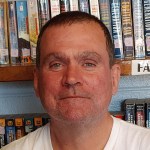
Jamal Woods, an incarcerated facilitator, stood to address the circle. Woods is a large man, and would be intimidating if it weren’t for the ever-present smile.
“I never thought of myself as a leader, but I often end up in these roles,” he said. “I’m a take-charge type of person. While people are complaining, I’m working on the solution.”
That wasn’t always the case for Woods, who landed in prison after shooting and killing two men during an argument. But during his roughly 16 years of incarceration, he’s built a new relationship with himself.
“Restorative justice showed me the flaws in society, not just me,” Woods said. “It taught me the environmental factors that led to most of my decisions, but also helped me take accountability for my actions.”
From California to Alabama
Woods was born in February 1985 in Los Angeles. When he was young, his uncle was killed by intergang violence. His mother wanted to get him out of that environment and moved them to Alabama, where one of his grandmothers lived.
“It was a huge adjustment for me,” Woods said with a smile. “People talk different in the South.”
Early on, Woods said he fought others a lot because he talked without a Southern accent or dialect — he didn’t fit in. But eventually, he made friends through sports, especially football, which was “the best part of the South,” he said.
His mother raised him to be an independent thinker from a young age. She taught him how to learn and study because she believed ignorance would subject him to the will of others. She wanted him to have the tools to educate himself.
In June 2004, when Woods was a 19-year-old college student at Alabama A&M University in Huntsville, he had a son and soon married. He worked at an automotive electronics company to support his new family while he went to school. But in 2005, Woods was fired from his job. He was unable to find another one quickly. So he started selling drugs and quickly developed a reputation after a failed robbery attempt left him scarred from a bullet graze.
“After that, I was not only aggressive,” Woods said, “I was aggressive with weapons.”
Then, one night in 2006, while Woods was out to dinner with his wife, he got into a dispute with a group of men, who he said had hit on his wife and disrespected the couple. Woods reacted by shooting and killing two men.
Woods said that, back then, he had not developed conflict resolution skills to navigate his way out of confrontations.
“Violence wasn’t in my nature, but was more of a defense mechanism,” he said. “My environment taught me to never be a victim. That it wasn’t OK to be vulnerable, and this in turn made me respond to all conflicts aggressively.”
At the time of his arrest, Woods had been majoring in psychology and minoring in criminal justice. He planned to become a lawyer. Instead, his studies ended on May 14, 2009, when he was sentenced to life without the possibility of parole. He was 24.
‘I’d rather be the healer’
In March 2022, more than a decade into his forever sentence, Woods arrived at Donaldson prison, where I’m detained. From the time he arrived, he seemed set on self-improvement. At Donaldson, he quickly signed up for HVAC classes in trade school.
“A good trade is something you can always fall back on,” he said. “Plus, it kept me focused.”
Then a school classmate invited Woods to a restorative justice group, where he met the lead volunteer, a woman named Pat Vandermeer.
“He’s a big guy, and he’s always smiling, but you could see a tenseness in him,” Vandermeer said of Woods.
Woods immediately took to Vandermeer’s teaching.
“Miss Pat is one of those people that you know is genuine,” he said. “She showed an interest in me, but it wasn’t just me. You know she really cares for us and that makes it easy to learn and accept instruction.”
Woods said the group has become a brotherhood to him, “a community of empowerment and forgiveness.” He said the group taught him about “dialogue without stance,” a conversational practice in which you do not adopt firm positions, opinions or personal biases and instead remain neutral and objective. He said utilizing this technique has helped him defuse conflict.
“I’m developing more skills to not react aggressively with aggressive people,” he said.
Vandermeer has seen a transformation in Woods.
“That tenseness, you no longer see that,” she said. “He’s engaged and open to learning. Then he passes on what he takes in. He’s one of my key leaders. Jamal is who I look to for accountability in our group. He’s good at helping others stay focused, myself included, and to remain accountable.”
Marcus, a longtime friend of Woods, has noticed his “big” transformation.
“When he was young and someone brought the drama, he’d entertain that shit,” Marcus said. “But now he thinks first. It’s like he’s the big brother. He’s telling me when things are not OK, not restorative. Jamal’s not only preaching it, he’s living it. And I knew I needed to get some of that.”
Marcus has become a huge part of the restorative justice group himself, following Wood’s path.
Courtney Arrington, who lives in the same unit as Woods, said that Wood’s positive changes have had an effect on him, too.
“The restorative justice mindset is something he’s grabbed on to, and [he] feels that he cannot only help himself but others, too,” Arrington said. “He gets in the dorm and encourages guys to come to the group … and helps them see a different way to do things.”
Woods said he’s trying to be an ambassador for the restorative justice group.
“The environment we grow up in, how society treats you, either by race or financial status, the things we learn in the neighborhood or from other kids at school — all of this has an impact on how we learned to make decisions,” he said. “We can blame who or what we want, but in the end, whatever decision I make, it’s mine, I own it. … I have to own and repair the damage if I cause harm. But my goal is to never cause harm again. I’d rather be the healer.”