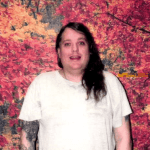
Editor’s Note: Since Lexie Handlang wrote this story, the Missouri state senate has banned the use of department of corrections funds for hormone replacement therapy. In early July, a routine appropriations bill included a single-line provision that triggered the abrupt discontinuation of hormone therapy in state prisons for women like Lexie. Da’Shae Breeze, another PJP contributor who writes from Missouri, reported on the effects this ban has had at her facility.
“You’re worthless,” my mother told me. “Nothing but a disgrace.”
We were sitting in the cramped visiting room at Jefferson City Correctional Center in southeast Missouri. It was 2019 and I had just told my mom I was medically transitioning from male to female. Disgust was written on her face.
Since coming to prison in 2014 and coming out as a transgender woman, I have lost the majority of my family members. My biological mom, my stepdad, my biological dad and my stepmom have all cut ties with me. This hurts more than words can describe. For a long time afterward, I was too afraid to allow people to get close to me.
But that changed around 2024, when I met William W. William is tall, about 6-foot-3 and 300 pounds. He has a robust voice that can be heard from far away. We used to walk along the fence, talking about life and our hopes for the future. He also warned against getting taken advantage of as a transgender woman by the men at the facility.
We got even closer in late 2024 when he became a porter for the Transitional Care Unit, where I was housed after a surgery. He was the only porter who helped me get to the toilet. I began to think of him as a father figure of sorts, taking care of me and making me laugh. He told dad jokes that were hysterical.
Q: How do you make a tissue dance?
A: Put a little boogie in it.
He is still there for me no matter what the situation may be.
Soon after becoming friends with William, I met Michelle D., a fellow trans woman who has been in prison for the last 28 years.
After several talks, I began to think of her as my sister. I admire her strength to be herself no matter what others may think or say. She has her own style and often does her salt-n-pepper hair in the style of the DC Comics character Harley Quinn, with a ponytail on either side of her head.
We used to hang out and walk the yard together, talking about men, life and our dreams for the outside world after we are released relatively soon. She and William have helped me become a more outgoing person. I now trust people, instead of shying away from connection.
The third member of my chosen family, Rusty A., came into my life during an emotional time when I needed a sounding board. I was on hormone therapy, so my emotions were heightened and I was having a hard time thinking clearly.
He introduced himself to me and one of my sisters while we were on recreation. I could tell he was levelheaded, and his straightforward attitude made me feel at ease.
Not a day goes by that he doesn’t make sure I am doing OK. He also checks me when I’m judgmental of others, reminding me that we all have problems.
Finally, I have Keith L., my cellie and best friend. We only met a couple months ago, but already I love him like family. Keith doesn’t judge me for being trans. Unlike my biological family, he doesn’t have any expectations of me, other than wanting me to be the best version of myself that I can be.
As cellies, we’ve built a deep trust living alongside each other. He makes me a cup of coffee when I wake up and always helps me when I am sick. I am in a wheelchair due to balance issues, and he pushes me wherever I need to go. We laugh together. We make meals together and watch wrestling together. I’ve met his daughter and consider her a close friend as well.
We also speak frequently about our hopes and dreams, like I do with William and Michelle. I feel conflicted talking to Keith about what I want to do after my release. He has been incarcerated since 1984 and, like others in my chosen family, will spend the rest of his life in prison. While I want to go home, I don’t want to leave them behind.
Today, almost all of us are in the same housing unit, which makes it easier to see each other. Michelle is in a different unit, but we still manage to spend time together in the medication line or at recreation.
I still crave a relationship with my biological family, but I cannot change who I am. I can only move forward with the family that loves and accepts me. I will cherish the time I have left with them.