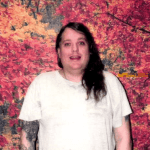
In early July, I attended what I thought was a routine doctor’s appointment in the medical department of Jefferson City Correctional Center. Instead of the in-person meeting I had expected, I spoke to a doctor through a TV screen in a cramped room. The head of the mental health department at my facility was the only other person there, which was also unusual. She stood next to my wheelchair as the doctor informed me that the state of Missouri was discontinuing my hormone therapy.
A few weeks earlier, Missouri’s governor had signed House Bill 2009 into law, funding the Missouri Department of Corrections through the next fiscal year. A single line at the end of the bill indicated that Missouri tax dollars would be prohibited from being spent on hormone replacement therapy. The bill also banned gender-affirmation surgery, sometimes referred to as sex reassignment surgery.
In an email to a Prison Journalism Project editor, Karen Pojmann, a spokesperson for the state DOC, said the agency must comply with Missouri law. “Other components of our transgender policies and procedures remain in place,” she said. Gov. Mike Kehoe and the bill’s primary sponsors, state Sen. Rusty Black and former state Rep. Dirk Deaton, did not respond to a request for comment.
When the telemedicine doctor told me about the bill, I was shocked. I couldn’t understand how one sentence, written by someone who has likely never spoken with the people affected by the bill, could undercut everything incarcerated transgender people in Missouri have fought for over the last decade.
The history of hormone therapy in Missouri prisons
Getting access to hormone therapy in prison has not been an easy process. Over and over, I’ve witnessed the state prison system harass us with complicated legal and medical battles when we fight to get proper treatment for our gender dysphoria.
For most of my 12 years in prison, the Missouri DOC denied hormone therapy to many incarcerated people under a “freeze-frame” policy, which meant hormone replacement therapy was only available to those who had been diagnosed with gender dysphoria prior to incarceration.
In 2018, Jesicca Hicklin, an incarcerated transgender woman in Missouri, successfully challenged the freeze-frame policy in federal court. The ruling won incarcerated people diagnosed with gender dysphoria the right to access gender transition care, even if they were not transitioning before incarceration. Withholding such care was a violation of the Eighth Amendment, the court decided, which prohibits cruel and unusual punishment, including inadequate medical care.
I began seeking gender-affirming care in 2017, before the federal court ruling. Growing up, I felt in my bones I was supposed to be a girl. I spent my teenage years under the care of the Department of Family Services in a home where I was allowed to express my gender. After turning 17, I went to live with my grandparents and went back into the closet to please them.
By 2017, it was all too much for me and I tried to kill myself while in prison. I died and was resuscitated with CPR. After being given a second chance, I decided I had to live as my authentic self, regardless of how hard the battle for care would be.
The federal court ruling the next year felt like a boon, but it still took me five more years to get on hormone replacement therapy. First, I waited two years to get access to a psychiatrist who specialized in gender dysphoria. Eventually, a psychiatrist agreed to evaluate me.
During our evaluation, the psychiatrist assessed whether I met the criteria for gender dysphoria, which includes symptoms like depression, anxiety and suicidal tendencies, as well as an assessment of my relationship to my gender. I answered questions about why I wear makeup, when in my life I started feeling like a girl and if I would want gender-affirmation surgery.
The psychiatrist diagnosed me with gender dysphoria in July 2019. Still, I was not automatically provided the treatment. I had to file grievances to get on hormone replacement therapy.
By the time the grievance process wrapped up in my favor, Missouri’s prison system had switched healthcare providers, from Corizon Health to Centurion Health. Centurion wanted a new assessment that followed their diagnostic process, which consisted of six hourlong sessions that reached the same conclusion: I had gender dysphoria.
I received my second diagnosis in early 2023, but even then, access to hormones was slow. The doctors at my facility had never started someone on hormone replacement therapy before and struggled to figure out an approach. I had to file grievances with the mental health department for inadequate care. Luckily I won my grievance.
My hormone therapy comes to an abrupt end
On Nov. 30, 2023, I began taking hormone replacement therapy pills twice a day. I was, and still am, the only person at my facility to successfully get the treatment.
From the moment I went on hormone replacement therapy, I felt nothing but relief. Living life stuck in the wrong body with no way out was traumatizing. Hormone therapy, and the physical changes that came alongside it, helped ease that pain. Within six months, I noticed small breast buds developing. My skin grew softer and I didn’t sweat as much. As these changes progressed, I felt more confident.
Unlike the roundabout process of starting hormone therapy, the end was abrupt. I was supposed to be weaned off my medication, but instead, on July 11, a few days after my telemed appointment, my doses just stopped.
All I got from medical and mental health staff was a paper with a list of side effects for stopping the medication, ranging from suicidal thoughts and worsening gender dysphoria, to high blood pressure, chest pain and vomiting.
So far, the list has been accurate. I regularly experience a fast pulse, chest pains and difficulty breathing. I am vomiting at least three times a day. I’m afraid to be around people. I stay in my cell like a hermit. My anxiety, depression and gender dysphoria are worsening.
These changes come at a time of increasing vulnerability for trans people in U.S. politics. In an article in LGBTQ Nation, one of the bill’s sponsors, Deaton, a Republican, was quoted saying that he decided to add the ban to the appropriations bill because of the change in conversation around this issue and the recent appointment of conservative judges to court offices. He said there is a distinction between appropriate healthcare generally and appropriate healthcare for incarcerated people.
“They are incarcerated on the taxpayer’s dime, for their room and board and also for their healthcare, paid 100% by the taxpayer,” Deaton said. “And what is appropriate healthcare under those circumstances, that’s what this [decision] speaks to.”
I wish that people like Deaton and his Republican co-sponsor, Black, could see that their decision has caused irreparable harm to me and my trans sisters and brothers. They have taken away vital medication and provided no support to navigate the physical and psychological changes that are being forced upon us.
Transgender people are just that: people. We are protected under the Eighth Amendment, just like any other incarcerated person in the U.S. We do not deserve less care because of the hatred of others or because our needs are different.
Although the state-level implementation was sudden and cruel, I have not been without support at the facility level. The mental health department has offered me therapy. In the one meeting I’ve had with them so far, the therapist was understanding, even apologetic, which surprised me. At one point, the therapist even said she was going to email the governor about the bill.
These days, I am full of uncertainty. I worry that people will no longer see me as a woman. I take some small comfort in knowing that my breast growth will not go away and, because of other medicine I took, my testosterone will not get higher.
Mostly, though, I wonder if there is anything I can do to fight this. My knowledge of the law is not great enough to allow me to file an injunction on my own, so I would need to rely on the help of attorneys.
I have to hold onto hope that someone will eventually take up our case. What else do I have?